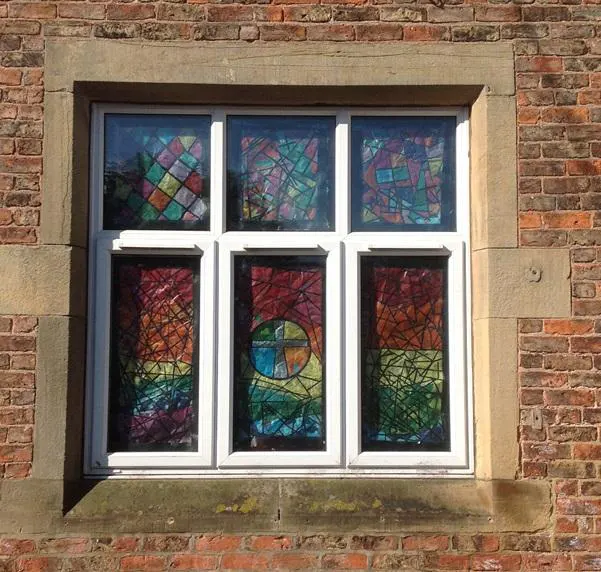

At our school, Art is an exciting and inclusive part of the curriculum where creativity, curiosity, and self‑expression are celebrated. We believe that every child is an artist, and our Art lessons provide opportunities for pupils to explore ideas, develop skills, and build confidence in their own creative voice. Art lessons at our school are joyful, inclusive, and designed to help children discover the artist within.
We follow the Kapow Primary Art scheme, which offers a rich, progressive curriculum designed to inspire children and nurture a lifelong love of the arts. Kapow supports high‑quality teaching and learning through clear skills progression, engaging resources, and a wide variety of artistic techniques.
Through our scheme, children are introduced to a wide range of artists and creative practitioners whose work inspires their own developing skills and artistic understanding.
Our Art curriculum is centred around three key areas:
🎨 Drawing
Children learn to observe closely, experiment with mark‑making, and use drawing to communicate ideas. Using Kapow’s structured approach, pupils explore:
- Line, shape, and shading techniques
- Drawing from imagination and observation
- A range of materials such as pencils, charcoal, ink, and pastels
Through repeated practice, children develop accuracy, control, and confidence—understanding that drawing is a skill that improves with time and exploration.
🖌️ Painting
Painting lessons allow pupils to explore colour, texture, and expression. With support from Kapow’s high‑quality planning and video demonstrations, children learn to:
- Mix and apply colours confidently
- Understand colour theory and tonal variation
- Work with different tools, including brushes, sponges, and palette knives
- Explore the work of influential artists and apply techniques to their own creations
Painting provides pupils with opportunities to express emotion, experiment boldly, and celebrate creativity.
🗿 Sculpture
Sculpture brings art to life in three dimensions. Pupils explore:
- Building with clay, wire, cardboard, and natural materials
- Techniques such as carving, joining, moulding, and constructing
- Creating both abstract and representational forms
- Looking at sculptors from different cultures and artistic periods
Sculpture encourages problem‑solving, spatial awareness, and imaginative thinking as children transform simple materials into meaningful artworks.